
 +39 - 39 - 307 6 3730
 +94 - 74 - 000 9208

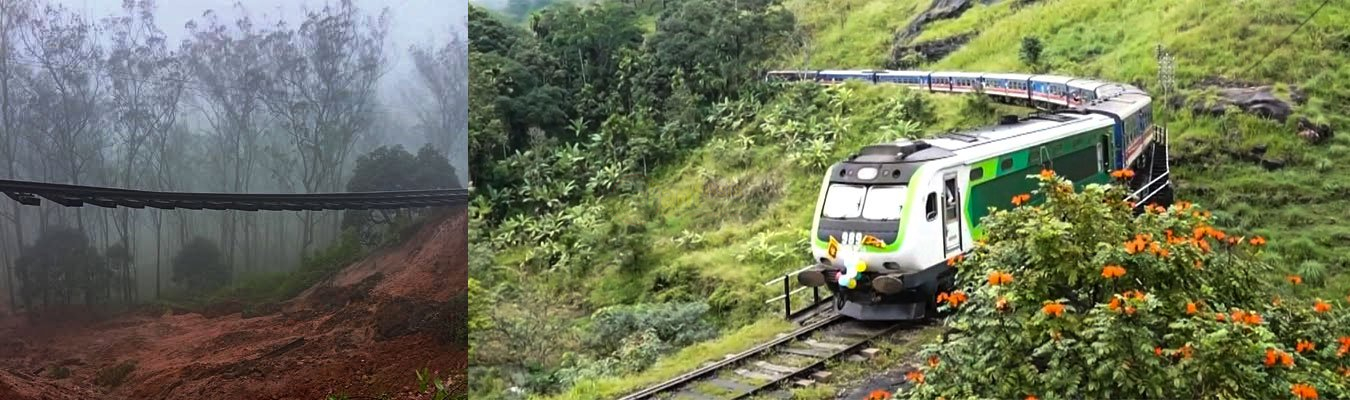
Where Resilience Rides the Rails – The Living Story of Sri Lanka Railways
Is Sri Lanka’s hill country train running after the Dithwa Cyclone?
Yes. The Badulla–Ambewela section was successfully reopened just 23 days after the cyclone, despite more than 20 landslides.
Why is this train journey considered one of the world’s most scenic?
The route passes through tea plantations, misty mountains, waterfalls, tunnels, and historic railway engineering, offering uninterrupted panoramic views.
Can travelers still see the impact of the cyclone?
Yes. Passengers can observe landslide recovery areas and rebuilt embankments, making the journey both scenic and educational.
Is this journey suitable for winter travel from Europe?
Absolutely. Sri Lanka’s hill country offers mild temperatures, lush greenery, and ideal conditions for Italian winter travelers.
Sri Lanka Railways: The World’s Most Scenic Train Journey Through the Hill Country
|

Just 23 days after the devastating impact of the Dithwa Cyclone on 27th and 28th November, the sound of trains once again echoed through Sri Lanka’s mist-covered central highlands.
|
|


Against all odds, Sri Lanka Railways restored operations on the Badulla–Ambewela section, a stretch that had endured over 20 landslides, demonstrating not only engineering capability, but the resilience and determination of a nation.
This achievement was more than the repair of tracks, bridges, and embankments.
|
|


Each year, thousands of international travelers journey across continents to experience this legendary route—sitting by open windows as clouds drift over tea-clad hills, waterfalls cascade beside the tracks, and remote villages awaken to the rhythm of passing trains. With the return of services, Sri Lanka once again affirmed that its heritage continues to move forward, uninterrupted by adversity.
A Railway Born from History, Built Through Mountains
The origins of Sri Lanka Railways trace back to the nineteenth century, when colonial Ceylon established one of the most carefully planned transport networks in the Indian Ocean region. Long before tourism emerged as an industry, this integrated system of roads and railways connected remote valleys, military outposts, and plantation settlements, shaping the island’s economic and geographic identity.
Governor Sir Edward Barnes (1820–1831), widely remembered as “The Great Road Builder,” played a decisive role in this transformation, constructing major carriage roads including the historic Colombo–Kandy route. Successive governors continued this expansion, carving transport corridors through mountainous terrain once considered impassable.
Yet it was the railway that ultimately transformed mobility and commerce.
The vision of a railway penetrating the hill country materialized in 1867, with the opening of the Colombo–Kandy railway line. Although not conceived for leisure travel, it soon became the lifeline of the plantation economy and, over time, the foundation of Sri Lanka’s most iconic scenic journeys.
As plantation communities in Hatton, Talawakele, Nanu Oya, and the Uva region demanded efficient access to coastal ports, the railway advanced steadily into higher elevations. By 1909, the network had expanded to over 562 miles, replacing journeys that previously required 50 to 80 days by bullock cart.
Through Tea, Tunnels, and Time
|
|


Between 1867 and 1924, one of the world’s most remarkable mountain railway systems was constructed in successive stages—winding through subtropical forests, dramatic escarpments, cascading waterfalls, and the heart of Sri Lanka’s tea country.
- Peradeniya to Nawalapitiya opened in 1874
- Nawalapitiya to Nanu Oya via Hatton and Talawakele followed in 1885
- Nanu Oya to Badulla via Ella and Demodara was completed in 1924
The final section stands as a masterpiece of railway engineering, featuring tight curves, tunnels, viaducts, and the world-famous Demodara Loop, admired by railway historians and enthusiasts globally.
At Pattipola, approximately 140 miles from Colombo, the line reaches an elevation of 6,226 feet (1,897.7 meters) above sea level, establishing it as the highest broad-gauge railway line in the world. Even today, Sri Lanka Railways maintains this technically demanding route with exceptional care, prioritizing passenger safety, comfort, and operational reliability over speed.
A Journey That Never Stops Inspiring
Along the Uva line, old English-style stations, traditional signal cabins, and the historic tablet signaling system remain in operation, transforming every journey into a living archive of railway heritage.
|
|


The reopening of the Badulla–Ambewela section is not merely a restoration of service.
It stands as a clear message to the world:
Sri Lanka’s stories continue to move forward.
Its natural beauty endures.
And its most iconic rail journey is ready to welcome travelers once again.
|
|


Updated Time Table – Ella Train Ride from 20.12.2025 (subject to change by the Railway Department)
Badulla - Ambewela: 9:00 AM & 3:00 PM
Ella: 9:50 AM & 3:50 PM
Ambewela - Badulla: 9:30 AM & 3:00 PM
Ella: 11:25 AM & 4:55 PM
Scenic stops include Demodara, Haputale, Ohiya, Pattipola
Common Stopping Stations (order):
1. Badulla (Start)
2. Hali-Ela
3. Uduwara
4. Demodara
5. Ella
6. Kitalella
7. Heeloya
8. Kinigama
9. Bandarawela
10. Diyatalawa
11. Haputale
12. Idalgashinna
13. Ohiya
14. Pattipola
15. Ambewela (End)
Typical Journey Duration
Travel time from Badulla to Ambewela on most trains is generally about 2 h 45 min – 3 h 15 min, depending on the service type, stops, and track conditions
Tips for Travelers
- Arrive early: Stations open well before departure—arrive ~30–45 min early if you need to confirm seats.
- Seat reservations: First-class and second-class seats often require reservations, especially in peak seasons.
- Variability: Schedules occasionally change due to operational adjustments or seasonal services—always verify with Sri Lanka Railways official board or ticket counter before departure.
Read more on Train Journey in Sri Lanka: https://www.fantasiatours.com/thinkstodocategories/view-activities/42
Recent Posts
- Can I travel Sri Lanka
- How I become an Elephant lover
- Asian Elephants vs African Elephants
- Elephants in Sri Lanka (Elephas maximus maximus)
- BEST PLACES TO SCUBA DIVING WITH CORAL REEFS IN SRI LANKA
- WHY ARE CORAL REEFS IMPORTANT?
- TRAVEL SRI LANKA BY DISCOVER THROUGH STAMPS
- BUDDHIST TEMPLE NEAR ME
- Village life of Sri Lanka
- Vessagiriya forgotten murals - Anuradhapura, Unesco World Heritage Site
Share this page